地球资源数据云——数据资源详情
教育经费如何筹措?
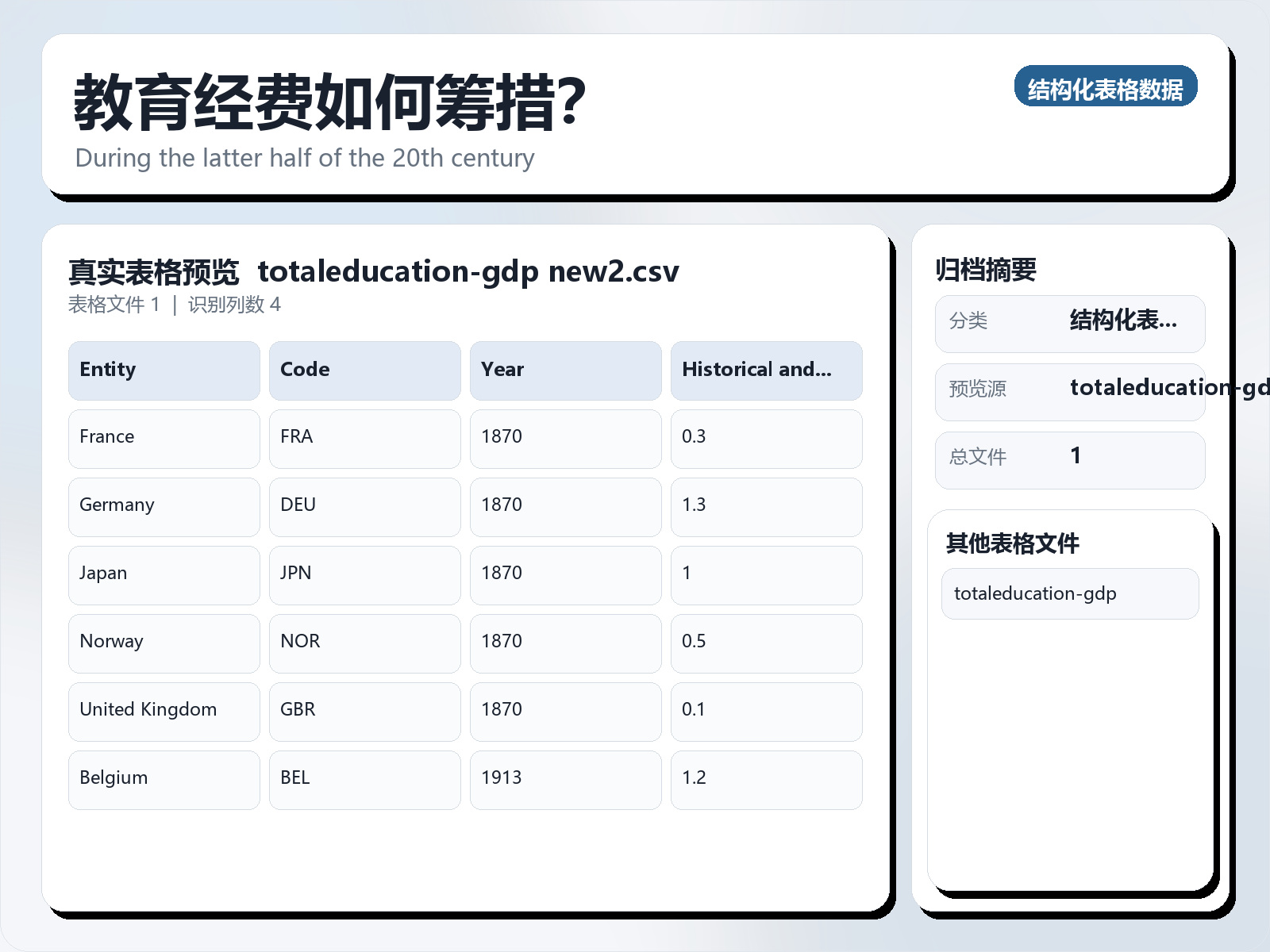
该数据集《How is education financed?》主要用于监督学习任务,数据形态以图像为主,应用场景偏向金融风控。 题目说明:During the latter half of the 20th century 任务类型:图像监督学习。 建议流程:先检查类别分布与脏样本,再用迁移学习(如 ResNet/EfficientNet)建立基线。 评估建议:使用分层切分或交叉验证,优先关注 F1、Recall、AUC 等分类指标。 可用文件:totaleducation - gdp new2.csv。 this graphs was retired this OurdataWorld : In contemporary society, basic education is not merely a right but also a duty, with governments tasked to ensure access while citizens are obligated to attain a basic level of education. However, this concept was not always pervasive. The mid - 19th century marked the inception of public education as a policy priority, primarily witnessed in industrialized nations expanding primary education through public finances and government intervention. An analysis of historical data unveils the pivotal role of local funding, particularly through taxes, in facilitating this educational expansion. During the latter half of the 20th century, education expansion transcended national borders, evolving into a global phenomenon. By 1990, government spending on education in many developing nations approximated levels observed in developed countries, reflecting a concerted effort towards educational parity on a global scale. This expansive drive bore fruit, as evidenced by a sustained reduction in education inequality worldwide from 1960 to 2010, across all age groups and regions.
摘要概览
该数据集《How is education financed?》主要用于监督学习任务,数据形态以图像为主,应用场景偏向金融风控。 题目说明:During the latter half of the 20th century
任务类型:图像监督学习。
建议流程:先检查类别分布与脏样本,再用迁移学习(如 ResNet/EfficientNet)建立基线。
评估建议:使用分层切分或交叉验证,优先关注 F1、Recall、AUC 等分类指标。
可用文件:totaleducation - gdp new2.csv。
this graphs was retired this OurdataWorld :
In contemporary society, basic education is not merely a right but also a duty, with governments tasked to ensure access while citizens are obligated to attain a basic level of education. However, this concept was not always pervasive.
The mid - 19th century marked the inception of public education as a policy priority, primarily witnessed in industrialized nations expanding primary education through public finances and government intervention. An analysis of historical data unveils the pivotal role of local funding, particularly through taxes, in facilitating this educational expansion.
During the latter half of the 20th century, education expansion transcended national borders, evolving into a global phenomenon. By 1990, government spending on education in many developing nations approximated levels observed in developed countries, reflecting a concerted effort towards educational parity on a global scale.
This expansive drive bore fruit, as evidenced by a sustained reduction in education inequality worldwide from 1960 to 2010, across all age groups and regions.
常见问题
教育经费如何筹措?是什么?
该数据集《How is education financed?
教育经费如何筹措?是什么数据格式?坐标系是什么?
数据格式为 CSV。
教育经费如何筹措?的时间范围是什么?
数据时间跨度为 1960–2010年。
教育经费如何筹措?覆盖什么区域?
该数据集覆盖范围为全球。
教育经费如何筹措?可以用于什么?
》主要用于监督学习任务,数据形态以图像为主,应用场景偏向金融风控。
如何获取并引用教育经费如何筹措??
在本页登录后即可下载。建议引用格式:地球资源数据云. 教育经费如何筹措?. https://www.gis5g.com/dataset/2032000616254312450