地球资源数据云——数据资源详情
学前教育率
该数据集《Pre - primary education rate》主要用于多分类任务,数据形态以文本为主,应用场景偏向文本内容分析。 题目说明:pre - primary education school completion rate 任务类型:文本多分类。 建议流程:先做文本清洗与分词,再比较 TF - IDF+线性模型 与 预训练语言模型。 评估建议:使用分层切分或交叉验证,优先关注 F1、Recall、AUC 等分类指标。 可用文件:School - completion - rates.csv。 Context Research shows that pre - primary education is critical for setting strong foundations for a child’s social, emotional and overall well - being. The early years of a child’s life build the basis for lifelong growth and children who fall behind in these early years often never catch up with their peers, leaving these children more vulnerable to underachievement and dropping out of school. Access to pre - primary education has almost doubled over the past 20 years. Despite this progress, more than 175 million children – or half of the pre - primary aged children globally – do not have access to this important experience. On a global scale, gender disparity is low, but wealth and location have a big influence on access. This means that both, boys and girls have roughly equal access, but children from rural areas, families with low socioeconomic status and less - developed regions experience higher barriers to an appropriate education.
摘要概览
该数据集《Pre - primary education rate》主要用于多分类任务,数据形态以文本为主,应用场景偏向文本内容分析。 题目说明:pre - primary education school completion rate
任务类型:文本多分类。
建议流程:先做文本清洗与分词,再比较 TF - IDF+线性模型 与 预训练语言模型。
评估建议:使用分层切分或交叉验证,优先关注 F1、Recall、AUC 等分类指标。
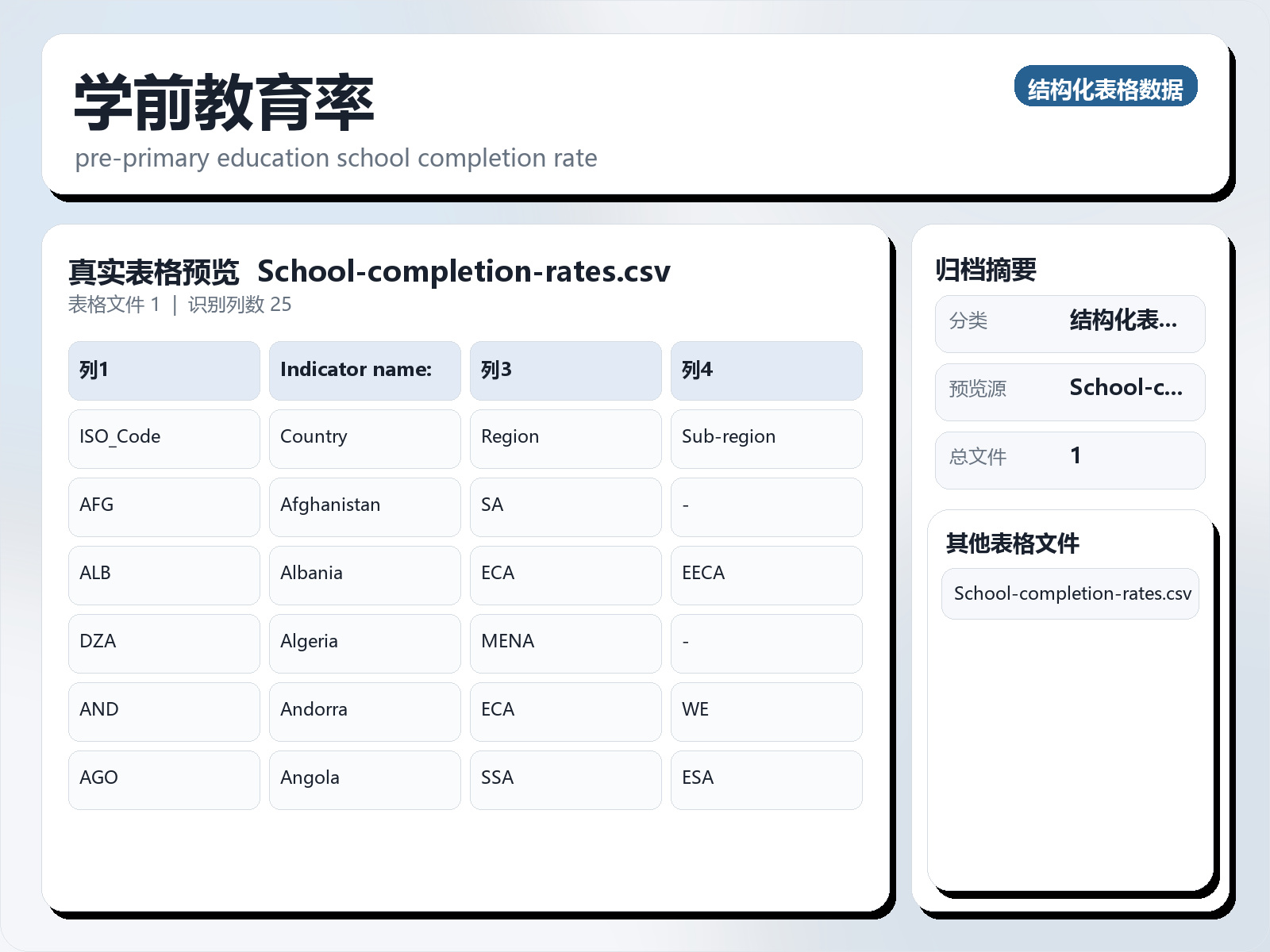
可用文件:School - completion - rates.csv。
Context
Research shows that pre - primary education is critical for setting strong foundations for a child’s social, emotional and overall well - being.
The early years of a child’s life build the basis for lifelong growth and children who fall behind in these early years often never catch up with their peers, leaving these children more vulnerable to underachievement and dropping out of school.
Access to pre - primary education has almost doubled over the past 20 years. Despite this progress, more than 175 million children – or half of the pre - primary aged children globally – do not have access to this important experience. On a global scale, gender disparity is low, but wealth and location have a big influence on access.
This means that both, boys and girls have roughly equal access, but children from rural areas, families with low socioeconomic status and less - developed regions experience higher barriers to an appropriate education.
常见问题
学前教育率是什么?
该数据集《Pre - primary education rate》主要用于多分类任务,数据形态以文本为主,应用场景偏向文本内容分析。
学前教育率是什么数据格式?坐标系是什么?
数据格式为 CSV。
学前教育率覆盖什么区域?
该数据集覆盖范围为全球。
如何获取并引用学前教育率?
在本页登录后即可下载。建议引用格式:地球资源数据云. 学前教育率. https://www.gis5g.com/dataset/2031998719275470849