地球资源数据云——数据资源详情
女性在全球 STEM 教育中的代表性
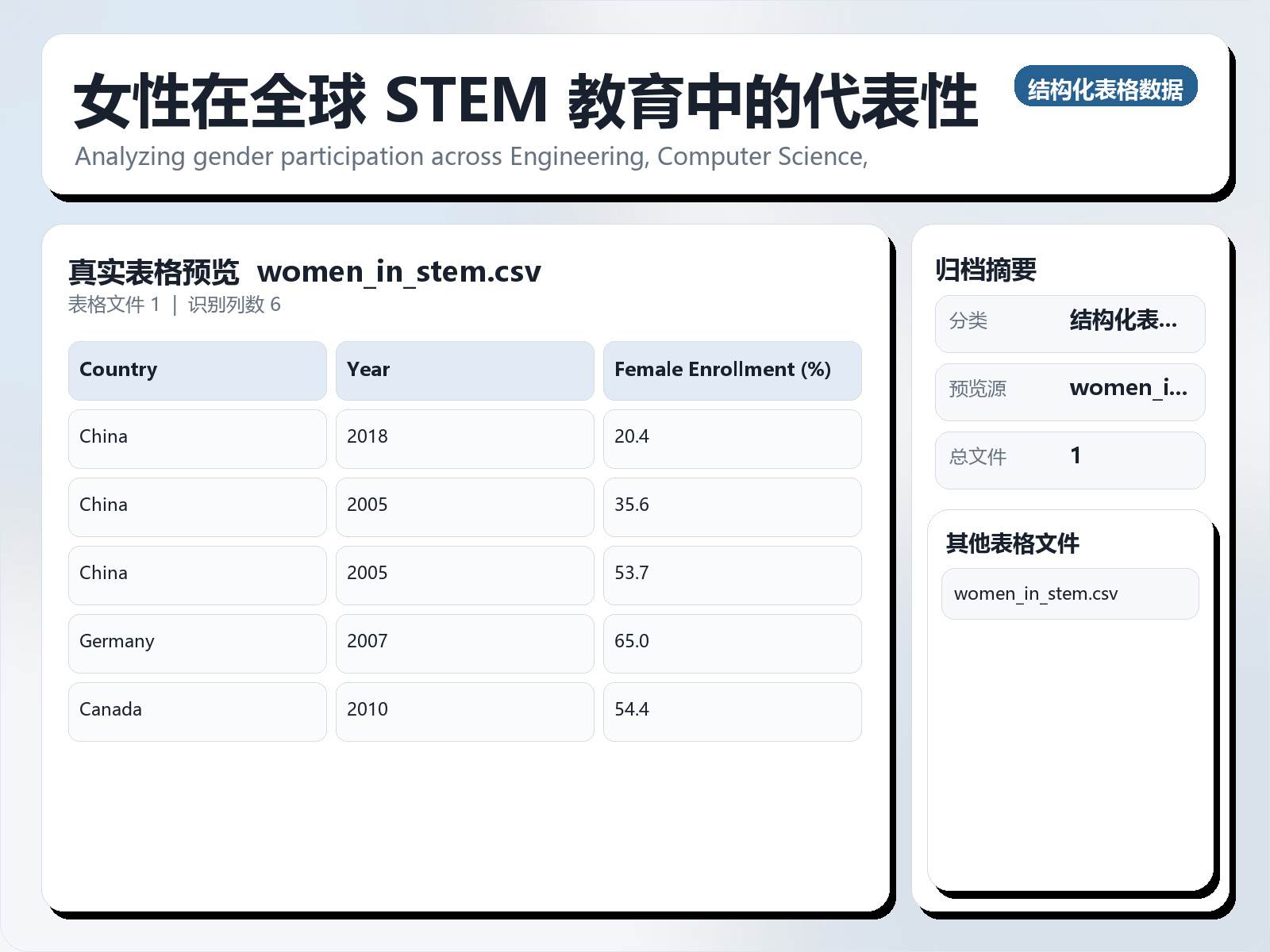
该数据集《Women’s Representation in Global STEM Education》主要用于监督学习任务,数据形态以图像为主,应用场景偏向天文科学。 题目说明:Analyzing gender participation across Engineering, Computer Science, Mathematics 任务类型:图像监督学习。 建议流程:先检查类别分布与脏样本,再用迁移学习(如 ResNet/EfficientNet)建立基线。 评估建议:使用分层切分或交叉验证,优先关注 F1、Recall、AUC 等分类指标。 可用文件:women_in_stem.csv。 Dataset Description This comprehensive dataset provides insights into women's participation in Science, Technology, Engineering, and Mathematics (STEM) education across major countries from 2000 to 2023. The data captures both enrollment and graduation patterns, offering a nuanced view of gender dynamics in STEM fields globally. This dataset explores the representation of women in STEM education globally over two decades. It includes data on female enrollment, graduation rates, and fields of study within STEM. Columns: Country, Year, Female Enrollment (%), Female Graduation Rate (%), STEM Fields (e.g., Engineering, Computer Science), Gender Gap Index. Key Features: Temporal Coverage: 24 - year span (2000 - 2023) showing educational trends over time
摘要概览
该数据集《Women’s Representation in Global STEM Education》主要用于监督学习任务,数据形态以图像为主,应用场景偏向天文科学。 题目说明:Analyzing gender participation across Engineering, Computer Science, Mathematics
任务类型:图像监督学习。
建议流程:先检查类别分布与脏样本,再用迁移学习(如 ResNet/EfficientNet)建立基线。
评估建议:使用分层切分或交叉验证,优先关注 F1、Recall、AUC 等分类指标。
可用文件:women_in_stem.csv。
Dataset Description
This comprehensive dataset provides insights into women's participation in Science, Technology, Engineering, and Mathematics (STEM) education across major countries from 2000 to 2023. The data captures both enrollment and graduation patterns, offering a nuanced view of gender dynamics in STEM fields globally.
This dataset explores the representation of women in STEM education globally over two decades. It includes data on female enrollment, graduation rates, and fields of study within STEM. Columns: Country, Year, Female Enrollment (%), Female Graduation Rate (%), STEM Fields (e.g., Engineering, Computer Science), Gender Gap Index.
Key Features:
Temporal Coverage: 24 - year span (2000 - 2023) showing educational trends over time
常见问题
女性在全球 STEM 教育中的代表性是什么?
该数据集《Women’s Representation in Global STEM Education》主要用于监督学习任务,数据形态以图像为主,应用场景偏向天文科学。
女性在全球 STEM 教育中的代表性是什么数据格式?坐标系是什么?
数据格式为 CSV。
女性在全球 STEM 教育中的代表性的时间范围是什么?
数据时间跨度为 2000–2023年。
女性在全球 STEM 教育中的代表性覆盖什么区域?
该数据集覆盖范围为全球。
女性在全球 STEM 教育中的代表性包含哪些字段或指标?
主要字段或指标包括Country, Year, Female Enrollment (%), Female Graduation Rate (%), STEM Fields (e.g., Engineering, Computer Science), Gender Gap Index. Key Features: Temporal Coverage: 24 - year s…。
如何获取并引用女性在全球 STEM 教育中的代表性?
在本页登录后即可下载。建议引用格式:地球资源数据云. 女性在全球 STEM 教育中的代表性. https://www.gis5g.com/dataset/2031262488660971521