地球资源数据云——数据资源详情
以色列-巴勒斯坦冲突中的死亡人数
该数据集《Fatalities in the Israeli - Palestinian》主要用于监督学习任务,数据形态以表格为主。 题目说明:datas about fatalies terrorists in israel and war palestine peoples 任务类型:表格监督学习。 建议流程:先做缺失值/异常值处理与特征编码,再比较逻辑回归、随机森林、XGBoost。 评估建议:使用分层切分或交叉验证,优先关注 F1、Recall、AUC 等分类指标。 可用文件:fatalities_isr_pse_conflict_2000_to_2023.csv。 Some Task Ideas: Analyze Fatality Trends: Explore the dataset and track the trends in fatalities over time. Identify any significant changes, spikes, or declines in the number of fatalities. Demographic Analysis:Conduct a demographic analysis by examining the age, gender, and citizenship of the individuals killed. Determine if there are any notable patterns or disparities in the data. Geospatial Analysis: Utilize the event location, district, and region information to perform geospatial analysis. Visualize the distribution of fatalities on a map and identify areas that have experienced higher levels of violence. Hostilities Participation Analysis:Investigate the extent of individuals' participation in hostilities before their deaths. Analyze the relationship between participation and the circumstances surrounding each fatality. Injury Analysis: Examine the types of injuries inflicted on individuals. Identify the most common types of injuries and assess their severity. Weapons Used: Analyze the ammunition and means by which the individuals were killed. Determine the most frequently used weapons or methods and evaluate their impact. Victim Profiles: Create profiles of the victims based on the available data such as age, gender, citizenship, and place of residence. Identify common characteristics among the victims.
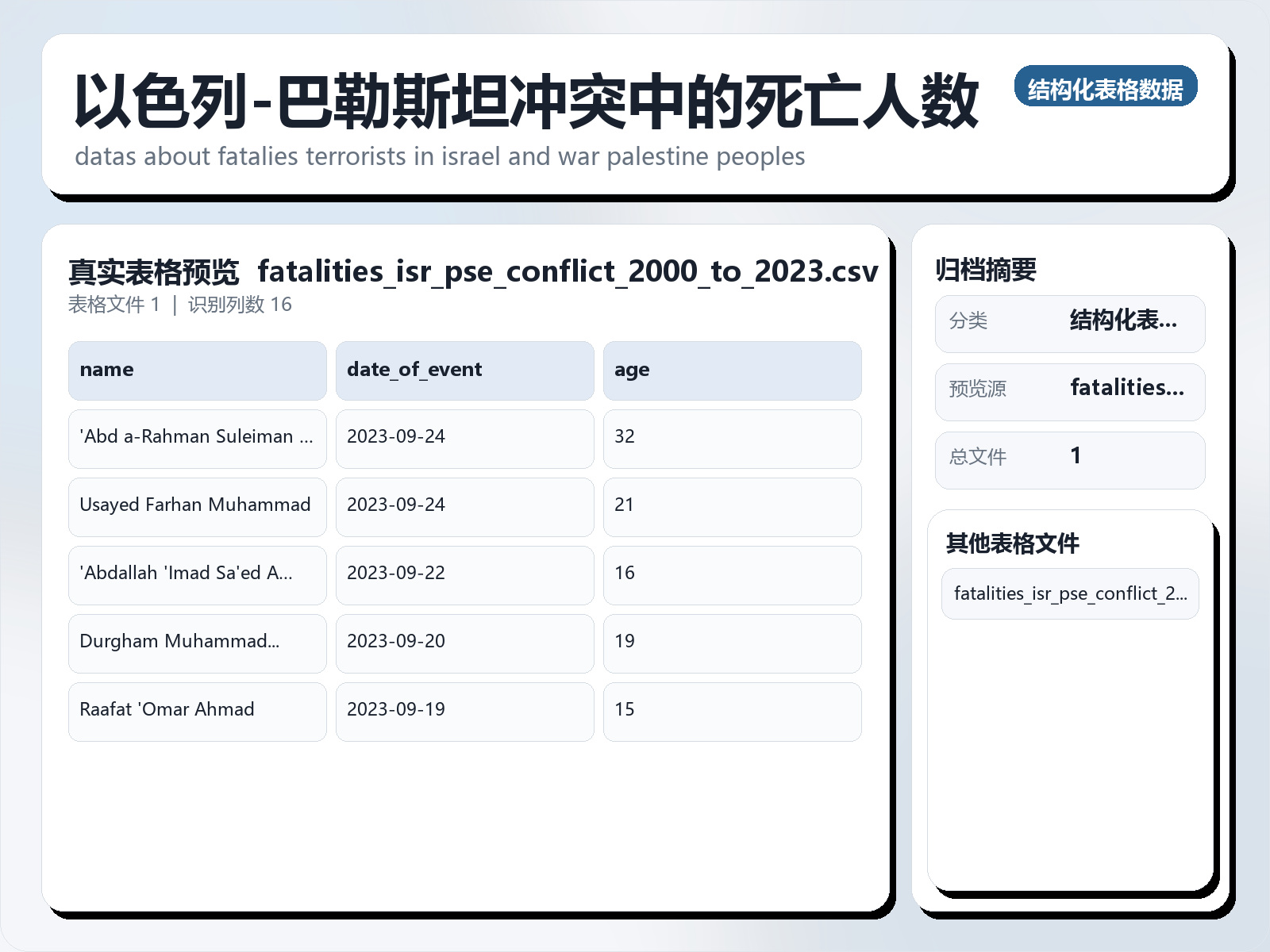
摘要概览
该数据集《Fatalities in the Israeli - Palestinian》主要用于监督学习任务,数据形态以表格为主。 题目说明:datas about fatalies terrorists in israel and war palestine peoples
任务类型:表格监督学习。
建议流程:先做缺失值/异常值处理与特征编码,再比较逻辑回归、随机森林、XGBoost。
评估建议:使用分层切分或交叉验证,优先关注 F1、Recall、AUC 等分类指标。
可用文件:fatalities_isr_pse_conflict_2000_to_2023.csv。
Some Task Ideas: Analyze Fatality Trends: Explore the dataset and track the trends in fatalities over time. Identify any significant changes, spikes, or declines in the number of fatalities. Demographic Analysis:Conduct a demographic analysis by examining the age, gender, and citizenship of the individuals killed.
Determine if there are any notable patterns or disparities in the data. Geospatial Analysis: Utilize the event location, district, and region information to perform geospatial analysis. Visualize the distribution of fatalities on a map and identify areas that have experienced higher levels of violence.
Hostilities Participation Analysis:Investigate the extent of individuals' participation in hostilities before their deaths. Analyze the relationship between participation and the circumstances surrounding each fatality. Injury Analysis: Examine the types of injuries inflicted on individuals.
Identify the most common types of injuries and assess their severity. Weapons Used: Analyze the ammunition and means by which the individuals were killed. Determine the most frequently used weapons or methods and evaluate their impact.
Victim Profiles: Create profiles of the victims based on the available data such as age, gender, citizenship, and place of residence. Identify common characteristics among the victims.
常见问题
以色列-巴勒斯坦冲突中的死亡人数是什么?
该数据集《Fatalities in the Israeli - Palestinian》主要用于监督学习任务,数据形态以表格为主。
以色列-巴勒斯坦冲突中的死亡人数是什么数据格式?坐标系是什么?
数据格式为 CSV。
如何获取并引用以色列-巴勒斯坦冲突中的死亡人数?
在本页登录后即可下载。建议引用格式:地球资源数据云. 以色列-巴勒斯坦冲突中的死亡人数. https://www.gis5g.com/dataset/2031261474914471937