地球资源数据云——数据资源详情
诗歌分类(NLP)
该数据集《Poem Classification (NLP)》主要用于多分类任务,数据形态以文本为主,应用场景偏向环保分类。 题目说明:Poem Phrases taken from Poem.org to do Classification on Poem's Genre 任务类型:文本多分类。 建议流程:先做文本清洗与分词,再比较 TF - IDF+线性模型 与 预训练语言模型。 评估建议:使用分层切分或交叉验证,优先关注 F1、Recall、AUC 等分类指标。 可用文件:Poem_classification - test_data.csv, Poem_classification - train_data.csv。 dON'T FOREGET TO UPVOTE IF you think DATASET IS WORTHY OF IT . dISCUSS ABOUT DATASET's Problem FREELY on discussion section. Poem When I used to ask students what a poem is, I would get answers like “a painting in words,” or “a medium for self - expression,” or “a song that rhymes and displays beauty.” None of these answers ever really satisfied me, or them, and so for a while I stopped asking the question. Then one time, I requested that my students bring in to class something that had a personal meaning to them. With their objects on their desks, I gave them three prompts: first, to write a paragraph about why they brought in the item; second, to write a paragraph describing the item empirically, as a scientist might; and third, to write a paragraph in the first person from the point of view of the item. The first two were warm - ups. Above the third paragraph I told them to write “Poem.”
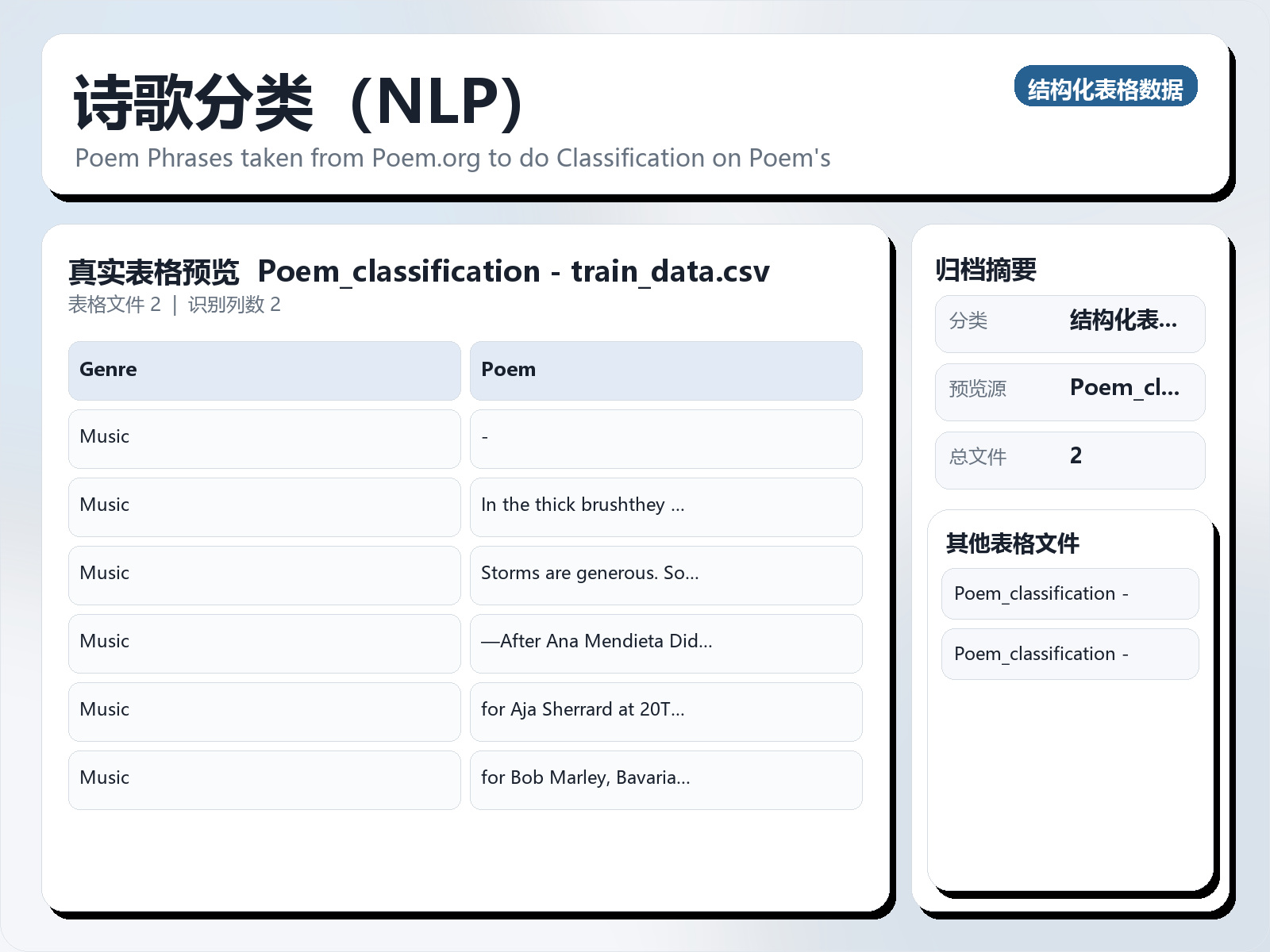
摘要概览
该数据集《Poem Classification (NLP)》主要用于多分类任务,数据形态以文本为主,应用场景偏向环保分类。 题目说明:Poem Phrases taken from Poem.org to do Classification on Poem's Genre
任务类型:文本多分类。
建议流程:先做文本清洗与分词,再比较 TF - IDF+线性模型 与 预训练语言模型。
评估建议:使用分层切分或交叉验证,优先关注 F1、Recall、AUC 等分类指标。
可用文件:Poem_classification - test_data.csv, Poem_classification - train_data.csv。
dON'T FOREGET TO UPVOTE IF you think DATASET IS WORTHY OF IT .
dISCUSS ABOUT DATASET's Problem FREELY on discussion section. Poem When I used to ask students what a poem is, I would get answers like “a painting in words,” or “a medium for self - expression,” or “a song that rhymes and displays beauty.” None of these answers ever really satisfied me, or them, and so for a while I stopped asking the question.
Then one time, I requested that my students bring in to class something that had a personal meaning to them.
With their objects on their desks, I gave them three prompts: first, to write a paragraph about why they brought in the item; second, to write a paragraph describing the item empirically, as a scientist might; and third, to write a paragraph in the first person from the point of view of the item. The first two were warm - ups.
Above the third paragraph I told them to write “Poem.”
常见问题
诗歌分类(NLP)是什么?
该数据集《Poem Classification (NLP)》主要用于多分类任务,数据形态以文本为主,应用场景偏向环保分类。
诗歌分类(NLP)是什么数据格式?坐标系是什么?
数据格式为 CSV。
如何获取并引用诗歌分类(NLP)?
在本页登录后即可下载。建议引用格式:地球资源数据云. 诗歌分类(NLP). https://www.gis5g.com/dataset/2031259880575635458